
Selected Letters: 1926–1955
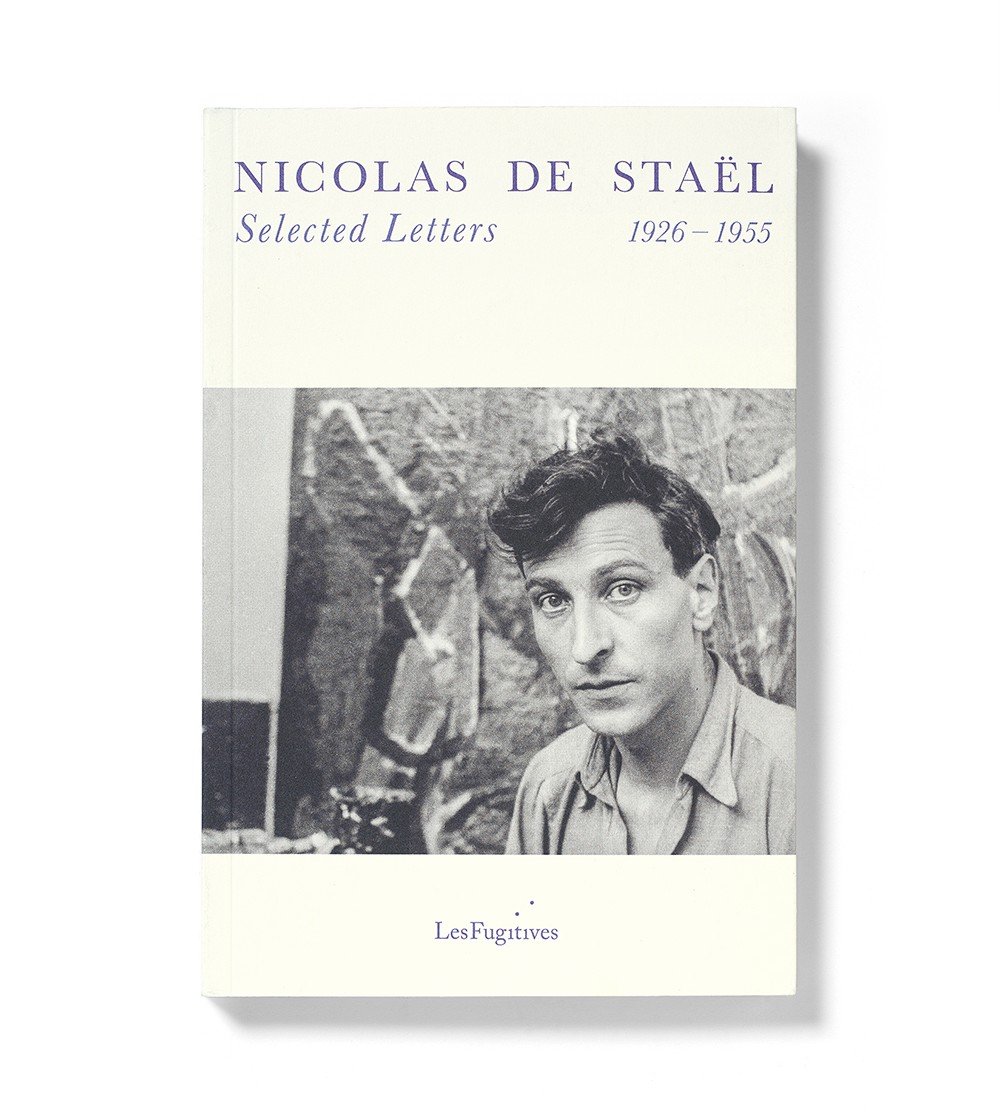
Selected Letters: 1926–1955
Translated from the French by Helen Stevenson and Nico Mann
With a preface by Jean Frémon
Available in English for the first time, these letters are taken from the complete letters anthologised by French art historian Germain Viatte, published in France in 2014. From his adolescence onwards, Nicolas de Staël developed an incisive writing style of his own, capturing – as in his paintings – the reality of what he saw with the intensity of pure simplicity.
‘De Staël wrote thousands of letters – to his adoptive parents, his wives and lovers, his children, gallery owners and dealers, poets, fellow painters and those who bought his work. They describe the course of his life from young man eagerly awaiting a cheque from a family member at a post office in Cadiz so he can buy his daily kilo of tomatoes, his wine, his newspaper, paints, canvases and sketchbooks, to the final months, when black gulls began to gather on his canvasses, bringing a darker, inky sense of foreboding to work that until then had been characterised by a boundless sense of colour and light. The letters also show the evolution of his understanding of painting, of what painting actually is, of the human cost – what part of the self must be sacrificed to it. And always he is aware of the complementary roles of language and painting. De Staël’s work, though it bears traces of figuration, is never illustrative; the writing is his illustrative tool, and his own words provide a dazzling commentary on the paintings.’
– Helen Stevenson
‘Nicolas de Staël’s letters are imbued with that mixture of absolute certitude and profound doubt which is the mark of a great artist. His belief in his destiny – which arises from faith – places the bar so high that it will always be impossible to clear. … He had the premonition that the path would be long and winding before it ever broke onto a clearing. Staël is not, like Raphaël, Géricault or Seurat, a precocious genius. If he must be compared to one of his predecessors, it is impossible not to think of Van Gogh.’ – Jean Frémon
‘Admiring of painters who “live with intensity”, Nicolas de Staël reveals a corresponding energy, joy, sensuality, and obsession behind his radiant artwork. Filled with painterly observations, and sparkling with the sun that blazes through his brushstrokes, these letters open up a practice that is paradoxically imbued with hesitation and drive, accident and profound commitment – and an overarching desire to celebrate the “myriad vibrations” of the moment. These utterly absorbing letters offer a new vocabulary for de Staël’s language in paint.’ – Suzannah V. Evans
From French reviews of the complete letters:
‘As absorbing and fascinating as the letters of Van Gogh.’ – Richard Blin, Le Matricule des anges
‘He puts his entire being into every sentence he writes, as though each one were an irrevocable act. He will do this until the very end.’ – Philippe Lançon, Libération
‘A rapid, ecstatic, at times violent but resolutely poetic rhythm. The writing of Nicolas de Staël is that of urgency, of creation, emotion, and doubt.’ – Daphné Bétard, Beaux-Arts Magazine
‘After having read these letters, so full are they with belief and life and tragedy, we see the colours, the skies, the rooftops painted by this hand which almost seems to move and tremble before us. A life in words and in painting.’ – Lisbeth Koutchoumoff, Le Temps
‘In reading these letters, one has the feeling of being as close as possible to the creative act, through its day to day struggles, the fondness and generosity felt for loved ones, through its vertigo, nobility and its disdain for everything commercial, through its incessant desire for renewal and its “inevitable need to break everything when the machine runs too smoothly”.’ – Édith de La Héronnière, Revue des deux mondes
‘To immerse yourself in [de Staël's] letters is to follow the thread of his biography: his formative years, his travels to Spain and Morocco, the visits he made to museums and to the masters (Vélasquez, Rembrandt, Delacroix, Van Gogh, Courbet) and gradually learning from them the rules of drawing, composition, colour; but also his intensely passionate relationships, his family life, his friendship with Braque and René Char, his chronic financial difficulties and later, right at the end of the 1940s, the recognition, the first exhibitions and the beginning of a more comfortable material existence – this just a few years before his death aged 41. For Nicolas de Staël more than anyone else, the biography is inseparable from the work. It is as though it were in constant evolution, in search of itself.’ – Nathalie Crom, Télérama
Paperback original, with French reverse flaps
210 pages, 180 × 120 mm
RRP £14.99
ISBN 978-1-0684338-9-4
Published: 1 October 2026
Please note that orders from this platform to our dear customers in the EU can no longer be fulfilled due to VAT regulations. Please order from an alternative UK online retailer, or contact us if you would like details about local retailers in your EU country of residence.